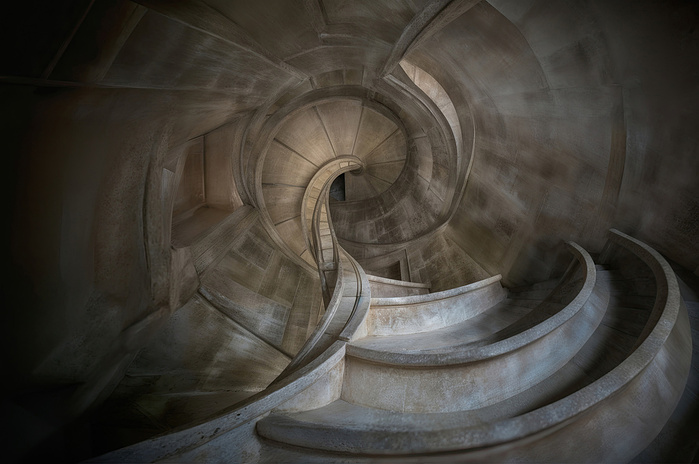
Enter a church, an abbey, and the first thing that happens is scale: the ceiling rises far beyond any human need, the silence grows a weight of its own, and the body understands, before the mind does, how small it is standing there.
Spiritual Breath is built from that instant. Not faith as doctrine, but architecture as argument — stone and light arranged, century after century, to make smallness feel like shelter rather than defeat. In these naves and cloisters, harmony is not decoration; it is the very mechanism that turns awe into something closer to safety, and silence into a place to stand.
What these buildings offer is not an answer. It is a held breath — the pause in which the transcendent, for a moment, feels near enough to lean on.


